

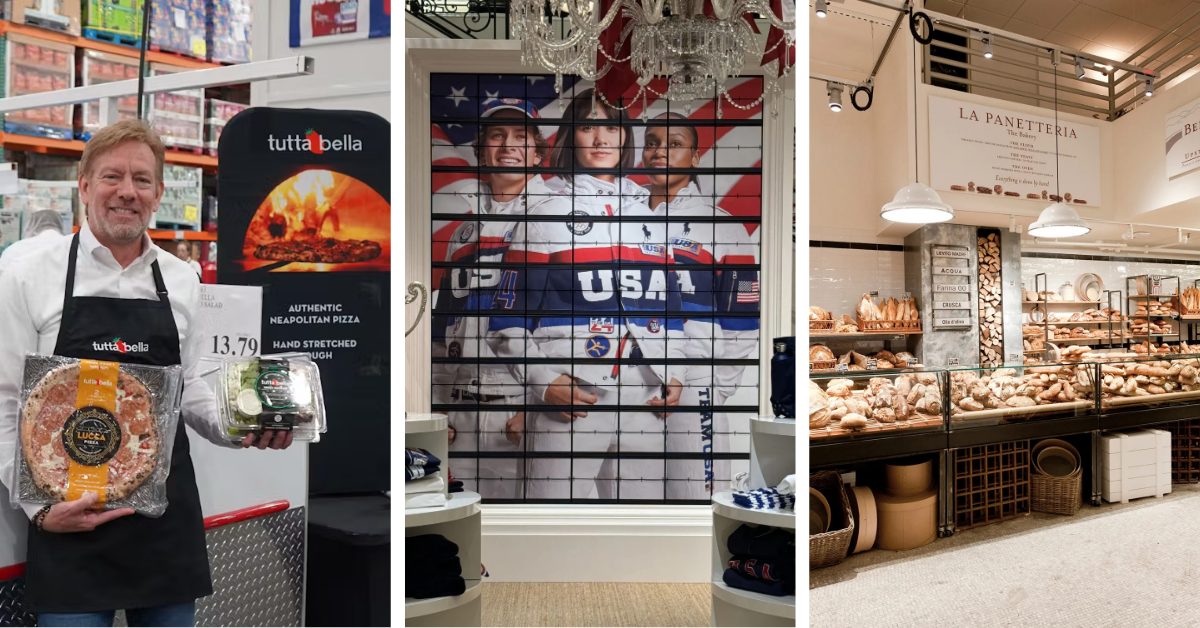
In the United States, up to 15,000 retail stores are expected to close this year, doubling the rate of closures from 2024. With many retailers shifting to a hybrid model, striking a better balance between a digital and physical presence, a recurring question emerges – where does the traditional brick-and-mortar retail experience fit? In our experience, the opportunity for all retailers lie in the same key area: within their retail store design.
We recently provided one of our Modern White Split Flap displays to the Titleist Shop at Pinehurst Resort, partnering with Outform to bring the board to life. The upscale retail store unintentionally serves as a great example of retail design. In the embedded video, golf caddy and sports commentator Jim “Bones” Mackay highlights the new store design, which includes a “first-of-its-kind” immersive fitting. Framed as a retail “experience,” the shop is carefully curated for the exact clientele of Pinehurst and Titleist: golfers who value heritage.
Consisting of discerning players, the target audience includes advanced players, professionals, and enthusiasts who see equipment as a tool but as an extension of their craft. For them, Pinehurst represents the historic home of American golf, while Titleist represents peak performance. The pairing of the two appeals directly to customers who appreciate timeless design, high-touch service, and premium quality.
In an article for the Pinehurst website, Eric Kuester, Pinehurst Resort’s Executive Vice President of Sales and Marketing, had this to say about the opening:
“Pinehurst and Titleist have proven over time to be an ideal pairing, where a timeless setting for the game meets the finest tools needed to help players reach their greatest heights. Together, we are excited to create an experience that reflects both purpose and place, one that enhances every golfer’s journey and deepens their love for the game.”
With Retail Store Design, Personality Matters
To add more context to the retail experience, let’s go back in time to 2008 to a completely different audience – the heyday of Victoria Secret brand PINK. Targeted at teens and college-age women, PINK was known for its distinct “cute and comfy” aesthetic, college-themed apparel, and accessible price points. At the time, PINK accompanied Victoria Secret retail stores in its own special “room” of the stores, decorated with bright, hot pink walls that were a strong contrast to the sophisticated and adult feel of its parent brand. Teens (and some adults) flocked to PINK over competitors like American Eagle and Abercrombie and Fitch through the late 2000s and early 2010s, with the popularly tapering off shortly after.
Today, Victoria’s Secret and PINK are undergoing a renewed focus to reach a new generation of shoppers.
“‘We want big hair, we want more glamour, we want more shine. We want more of it. We want all of it,” said CEO Hillary Super.
The descriptive desires of the customer and brand, such as “glamour,” “shine,” and “big hair,” paint a strong picture of personality. It’s clear who the brand is for – and who it isn’t. PINK, along with brands with a similar cult following, has a clear opportunity to lean into this personality, creating exciting and inclusive spaces that can only be experienced at their retail locations.
Featured Project: Titleist Retail Signage
The Titleist split-flap display, installed at the pro shop at Pinehurst Resort in North Carolina, delivers on-brand messaging in our sleek, Modern White frame.

Retail Store Design – Modern Success Stories
Costco is a frequent example of a brand with a cult following and strong retail presence. With a significant market share, Costco is currently the third-largest retailer with annual sales (2024) of $242.3 billion. Customers rave about Kirkland, Costco’s signature brand, as well as their evolving inventory and low prices, including a $5 rotisserie chicken and $1.50 hot dog combo at the store’s food court. But Costco isn’t the only company tapping into the cult of personality and in-store experience.
Eataly, a retail store meets restaurant hybrid, reported a 4.3% increase in revenue to €684 million as it expands internationally. The expansive store, which feels more like a little neighborhood in Rome rather than a traditional “store”, typically includes several areas to purchase gourmet Italian groceries, grab a cocktail or slice of pizza, a quick gelato, or a full sit-down dinner. Described as a “Disneyland for Italian food lovers,” Eataly also hosts workshops and events, making it a one-stop shop for all things Italian.
Breaking Down The Details
What’s remarkable about PINK, Costco, and Eataly is that none of the retailers have a strong reliance on a digital presence. While supported by digital marketing, the power of each brand lies in its ability to cater to customers in person. And customers are happy to oblige, willing to make pilgrimages to the closest location. It’s within those target customers where the personality of the brand lies.
Here’s what retailers can learn from each brand.

Branding at its Best
The retail design of PINK shows how stores can go beyond selling products to creating memorable brand experiences. Large-format visuals and premium details (such as the Ralph Lauren Team USA Picture Flap display) establish identity and aspiration, while playful, shareable moments (photo props, the gold dog statues, image via Racked) encourage social engagement. Through clear product placement, bold color palettes, and experiential elements, PINK draws customers deeper into the space, blending storytelling, entertainment, and shopping into a cohesive experience.

THE ULTIMATE EXPERIENTIAL RETAIL
This collage of images highlights how Costco leverages experiential retail to create engagement and drive sales. Product demos, like Tutta Bella’s pizza sampling (image via Tutta Bella), establish authenticity and connect directly with shoppers through storytelling and taste. Bite-sized food samples encourage trial and discovery, turning everyday shopping into a multisensory experience. The wine display emphasizes premium selection and transparent pricing, framed neatly to signal value and quality. Together, these elements show how Costco balances efficiency with memorable in-store moments. (Additional image from Reddit).

A MODERN RETAIL MARKETPLACE
This retail design of Eataly reflects how the restaurant combines atmosphere, nostalgia, and interaction to elevate the food experience. The images of the new King of Prussia location show open spaces, ephemera such as vintage-style food tags, and striking visual displays, reinforcing a tactile, analog connection to hospitality. These elements demonstrate how Eataly blends design, heritage, and experiential touch points to create a marketplace that feels both modern and timeless, encouraging customers to linger, engage, and return. (Images via The Philadelphia Inquirer, Delco, and The Business Journals).
Featured Project: Nespresso Retail Signage
The Nespresso split-flap display, installed in the lobby of the flagship retail location in NYC, delivers on-brand messaging and pixel-style animations with custom-colored flaps.

BREAKING DOWN THE CUSTOMER EXPERIENCE
A target consumer for the Victoria’s Secret brand PINK is, admittedly, Gen-Z, a shift from their traditional millennial focus. Ranging from 13-18 year olds in 2025, the average Gen-Zer values tactile experiences, body positivity, and interaction. More than half (53%) of Gen Z identify physical bricks-and-mortar stores as their preferred shopping method, demonstrating their desire and willingness to get offline.
In this sample buyer persona we created for PINK, we identified a 16-year old student, “Olivia” a target consumer who has additional income from their part-time job.
For “Olivia,” a visit to a PINK location feels like a trip to Barbie’s closet. Hooked by the fact the brand created costumes for one of her favorite artists, Sabrina Carpenter, the PINK experience gives Olivia the same sense of “shine” and “glamour” that CEO Hillary Super described through a safe, vibrant, and curated space of colorful pajamas and sweats.
How to replicate it: Focus on what is nostalgic and fun for your customer. In the case of PINK, their target customer is looking for an elevated shopping experience. PINK provides that experience with bold colors and vibrant branding that is a departure from the typical retail design and decor. A picture flap that flips through brand photos and sculptures, such as the PINK dog, can be an eclectic and lively addition. Analog photobooths (similar to the ones offered in select Urban Outfitters, which cleverly encourage visitors to share their pictures online) or Polaroid walls can also add an interactive community-building feature to a space.

Exploring Experiential Retail
The target consumer for Costco is suburban, family-oriented, and often, value-conscious. In these areas, Costco competes with typical grocery stores and chains, with an increasing amount of competition from discount grocers like Trader Joe’s, Aldi, and LIDL. To counter these brands, Costco excels in the art of the “treasure hunt,” sneaking in high-value items that can only be found when you scour the aisles.
Our buyer persona for Costco, “Henry,” is willing to take the time to shop at the warehouse brand for this reason. With a tight budget and family to feed, Henry still loves to cook and takes pride in preparing meals. Costco caters to Henry directly with a balance of high quality Kirkland Signature products (think olive oil, cheese, nuts, and even vodka) and finds like King Arthur flour and Daisy dairy products.
How to replicate it: Find the most underutilized areas of your retail stores. Where is there empty space for a surprise? Without disturbing the flow of the space, carefully placed free samples or special deals can make all the difference for an in-person shopping experience. Recessed shelving, additional counter space, and higher shelving can also help make better use of the space. Endcap chalkboards (similar to Trader Joe’s handwritten signage) can also highlight “treasure hunt” deals, written daily by staff.

Uncovering the New “Third Place” Grocery
The typical Eataly customer is discerning and seeks a novel experience when grocery shopping, eating at restaurants, and trying new food. With an above-average household income, higher monthly grocery and takeout budget, and likely based in a major metropolitan area, the target persona visits their local Eataly not to shop for essentials, but to find hard-to-find items.
Our buyer persona for Eataly, “Morgan” lives in New York City, just a 30 minute subway ride from the Eataly location in the Flatiron district. She visits the store to browse, grab lunch or meet friends for drinks. She values the opportunity to participate in Eataly’s cooking classes and wine pairings.
How to replicate it: Plan for experiential experiences within your retail store. Depending on the brand, this could be a small event space, demonstration counter, or in-store workshop (similar to some Williams-Sonoma locations). These spaces can be equipped with custom lighting and mechanical split-flap displays to promote upcoming events. Additional features such as analog ticketing counters and printed take-home menus can provide ephemera that gives customers a tactile reminder of their visit.

Retail Store Design – Achieving it With Analog
Consumers may still seek out convenience and cost-effectiveness online, but with the right in-store experience, they’re not shy about visiting a physical location. When brands design retail spaces with this mindset, they create environments where customers can truly live the brand story and ethos, whether that’s stepping into a world of bedazzled PINK sweatpants, immersing themselves in the heart of Italian eating, or experiencing the heritage of Titleist. Tactile, analog touch points are the key to framing these spaces, transforming store visits into lasting memories that drive both loyalty and connection.
Cover image, from left: via Tutta Bella, Oat Foundry, and Refinery29