

The Louvre Museum, located in Paris, France, is the most-visited museum in the world and a leading pioneer in tactile accessibility through analog components since 1995. These thought-provoking exhibits are still on display at the world-renowned Louvre Museum today. In 2023, the sculpture discovery area was opened to the public, offering the masses from all over the world the unique opportunity to align sight with touch and showcase replicas of the greatest masterpieces of our time.
Alongside the ever-present analog elements we know and love, the tidal wave of digital technology in museums began in the 1980s, with experiments in interactive displays, digital kiosks, and signage. Digital technological advancements have reached us in museums today through augmented and virtual reality, visitor apps, online platforms, and more.
With digital technology, we are becoming increasingly desensitized to the constant influx of new information, resulting in overstimulation and disengagement. This is the very reason museums are shifting back to creating multi-sensorial experiences by incorporating analog elements. Lately, museums are leaning towards a thoughtful, intentional balance of digital and analog technologies, further encouraging a more profound understanding and increasing connection and engagement.

How Designing A Museum Exhibit Requires Digital & Analog Harmony
When we talk about designing a museum exhibit, we are choreographing the visitors’ emotional, intellectual, and sensory experience. Although screens provide a wealth of knowledge, they lack the essentials at the core of the human experience: warmth, presence, and authenticity. Whether it’s mechanical movement, ambient sound, or tactile components, analog elements have a way of slowing traffic, drawing attention, and prompting curiosity.
According to leading design firms, such as Gensler, this blossoming era of museum innovation is inspired by multisensory storytelling, pacing, and experiential depth, creating an optimal immersive experience. In their research, visitors respond best to environments that layer both digital and analog elements, sparking wonder with multiple modes of engagement.
The goal isn’t to replace digital components, but to counterbalance by incorporating analog elements that evoke authentic, atmospheric nostalgia and elevate the narrative.

This image from Exhibitor Online teases the seven design tenets in museums.
The Human Touch: Why Analog Elements Still Matter
Despite the dominance of digital tools, analog technology continues to play a significant role in many cultural spaces. Why? Because analog is innately human.
- Analog Fosters Emotional Connection – The physical, mechanical movement breathes life back into the space. The steady hums, clicks, and rotations provoke elements of surprise and excitement. Providing instant connection through not just sight, but feeling and sound.
- Analog Prevents Screen Fatigue – As we are accustomed to encountering several screens throughout our day, relying solely on digital content increases the risk of constant virtual background noise. Analog stands out among the rest because of the clean break in the monotonous digital patterns.
- Analog Provokes Slower, Deeper Thought – With the mass influx of information coming across our screens daily, we are encouraged to simply scan, rather than digest. When physical movement, encapsulating sound, or tactile textures are introduced, people choose to slow down, listen, and feel.
- Analog Enhances Authenticity – Exhibits with historical, industrial, or mid-century narratives allow for analog to reinforce the era’s or theme’s storytelling elements, creating an organic experience.
The Oat Foundry Split Flap: An Analog Centerpiece For Design
The Oat Foundry Split Flap display sits at the intersection of nostalgia and engineering, a modular mechanical design that reveals text, numbers, or imagery through a captivating dance of flipping tiles; a modernized version of the iconic European airport departure boards that captivated travelers of the past.
The magical, definitive qualities:
- Striking and bold display with contrasting characters
- Mechanically mesmerizing with both sound and movement
- Digital integration with modern software
This Split Flap design presents a rare opportunity when designing an exhibit for a museum to incorporate an analog piece of technology that still operates with the same reliability and programmability as modern digital systems. It also works well for museum wayfinding or as a signature feature on a donor wall or recognition display.

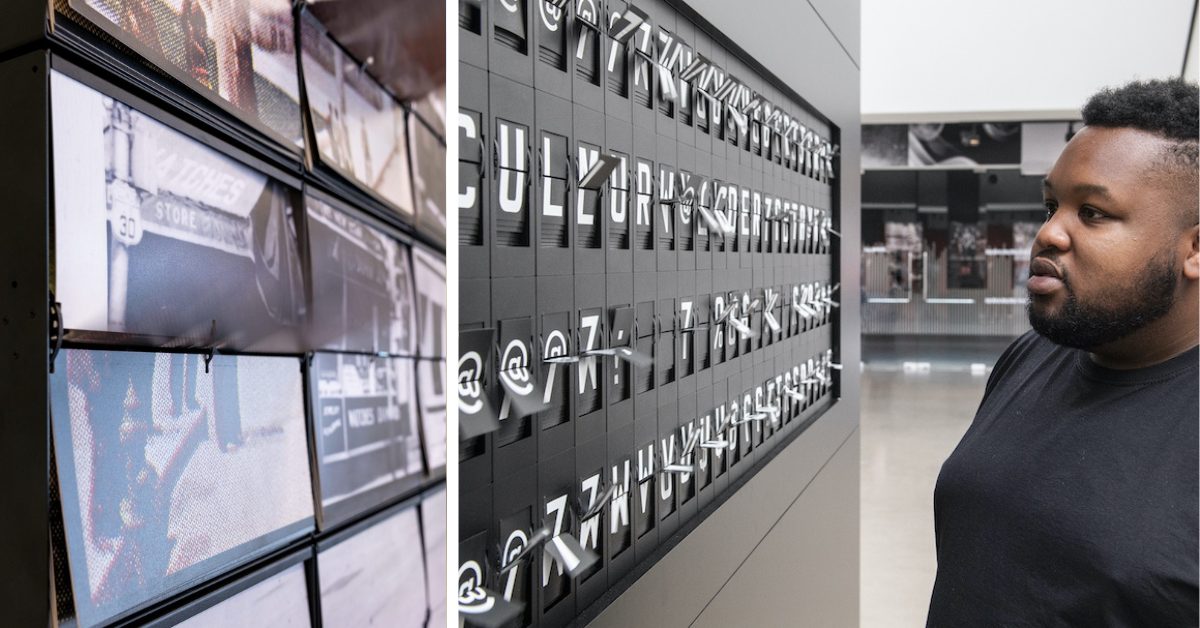
A Split Flap at the Imperial War Museum in London. Read more about the project here!
Case Study: The Joliet Historical Museum
The thoughtful balance of digital and analog elements can be experienced at the Joliet Historical Museum, home to one of the most celebrated stretches of the historic Route 66.
The museum envisioned a charismatic storytelling tool that aligned with its mid-century automotive exhibit. Instead of using another screen, they chose a 5×6 Picture Flap display that reveals historically relevant photographs through mechanical transitions. The final product is a visually rhythmic design that aligns with their classic Americana aesthetic, bringing the narrative to life.
Why it works so well:
-
- Authenticity to the era: The mechanical movement aligns with the mid-century narrative.
- Motion without oversaturation: The gentle flipping draws curiosity and attention to the piece without overtaking the environment.
- Anticipation: With every flip of a tile, a new image is displayed, creating a grand reveal to take in and explore.
- Memorability: Visitors will recall the sound, the motion, and how the display made them feel, bringing a unique experience that digital screens can’t do on their own.
This Picture Flap display installation connects the ideas that analog technology can enhance storytelling elements and act as a powerful, creative tool when designing a museum exhibit.
When To Use Digital vs. Analog
When creating the right balance of digital and analog elements, it’s important to work with the strengths each provides.
Digital Strengths:
- Educational content
- Interactive maps
- Archival browsing
- Immersive storytelling (AR/VR)
- Motion graphics
- Captioning and multi-lingual support
Analog Strengths:
- Atmospheric and sensorial engagement
- Thematic and historical immersion
- Pacing the visitor’s journey
- Emotional resonance
- Donor recognition
- Experiential anchoring
How is this balance portrayed in the design of a museum exhibit? Witnessing the fine dance of these combined strengths at play can look like:
- A Split Flap display introducing each room, with nearby screens offering deeper context
- An analog timeline that uses mechanical transitions, paired with digital archives
- Kinetic signage that directs visitors into digital interactives
- Rotating analog displays that lead into digital projection mapping

Case studies of visitor‑centered exhibition development describe galleries that now combine labels, wall text, hands‑on physical components, and mobile or screen‑based interactives, with user testing used to balance analog and digital experiential engagement tools. Learn more about how the Joliet Museum (pictured on the left above) used a Picture Flap here.
How Split Flap Displays Enhance The Museum Experience
When integrating a Split Flap display into a gallery or exhibit, it reaches further than simply presenting information; it captivates the minds of those who enter the immersive space.
- Sound Becomes a Design Element – The exciting ripple signals transformation, draws attention, and ignites fascination.
- Movement Guides The Eye – The ever-changing display draws the eyes of everyone nearby, serving as an immersive centerpiece.
- Nostalgia Deepens Engagement – The Split Flap display touches upon the warm memories of the past: train stations, travel, timekeeping, and communication. This allows visitors to build a deeper connection with the exhibit.
- Sustainability Supports Long-Term Exhibits – With a minimal mechanical design and low energy consumption, Split Flap displays can operate for years with minimal maintenance, ensuring reliability and cost-efficiency.

Gensler’s Influence: Designing For Experience First
Gensler, a thought leader for the museum world who continues to inspire, emphasizes the necessary shift from digital saturation to curated, thoughtful, and layered experiences. Their pieces on the future of museums introduce major themes that align with Oat Foundry’s approach.
Immersion isn’t solely based on digital technology; it stems from atmospheric design, thoughtful storytelling, and physical presence, drawing visitors into the exhibit rather than surrounding them with information. Working to balance the senses is essential to creating a memorable experience; engaging sight, sound, movement, and emotion, married together as one.
Additionally, when digital tools are used, they should serve as a supportive context rather than dominate the experience. Museums continue to be encouraged to incorporate digital elements strategically, giving space for analog elements to breathe dimension and personality into the space.
This is why museums are beginning to reintroduce analog technologies back into their exhibits, not to compete with digital components but to enhance the overall experience. The mechanical presence of the Split Flap display adds texture, pacing, and authenticity, solidifying that the visitor’s experience is the main priority, not the technology.

Reports from museum technologists emphasize that visitors increasingly seek tactile, non‑screen experiences, but still expect the immediacy and personalization that digital systems can provide alongside objects and architectural space.
The Path Forward: Museums Built For Human Connection
A new era is on the horizon for museum design, pursuing digital technology as a singular element of the layered immersive experience, not the centered focus. People crave places that make them feel embraced with the warmth of authenticity and thoughtfulness, leaning into the moments of wonder rather than the information itself.
By designing a museum exhibit with both analog and digital elements, spaces can be created that:
- Initiate curiosity
- Feel timeless
- Slow people down
- Foster emotional resonance
- Tell immersive stories
Oat Foundry’s Split Flap displays and Picture Flap displays represent this beautiful balance: mechanically modern, programmable analog, nostalgic yet significant. The museum of the future isn’t a purely digital destination. It’s an ecosystem where screens and tactile experiences coexist, each enhancing the other. In that balanced landscape, analog technology becomes an influential contributor to visitor engagement and emotional depth.


Let’s Put Your Wall in Motion
Split Flap transforms ordinary spaces into unforgettable experiences.
Book a demo today to learn how to build a display as unique as your brand.