

When it comes to our installations, we see a lot of comparisons (and misconceptions) about analog technology. When asked about the aesthetic difference between our mechanical split-flap display and a digital simulation, we often fall back on a simple comparison. A mechanical Split Flap, built to order by hand in our Philadelphia workshop, is a work of art.
When you put it side by side with a digital simulation, it’s like comparing framed, dimensional artwork like the Mona Lisa to setting the Mona Lisa as your computer background. While neither is inherently “incorrect,” each option offers a unique aesthetic and serves different goals in a brand space.
Mechanical Split Flap vs. Digital Split Flap
Comparing Aesthetics and Experience
While our displays are beautiful enough to earn their spot in museums and luxury spaces, they also scale and function as powerful communication tools. Here’s how we feel about Foundry Split Flaps and Picture Flaps compared to digitally simulated Split Flaps.

At Mothership in Boston, physical flaps create real depth, texture, and dimensional movement that a screen can only simulate.
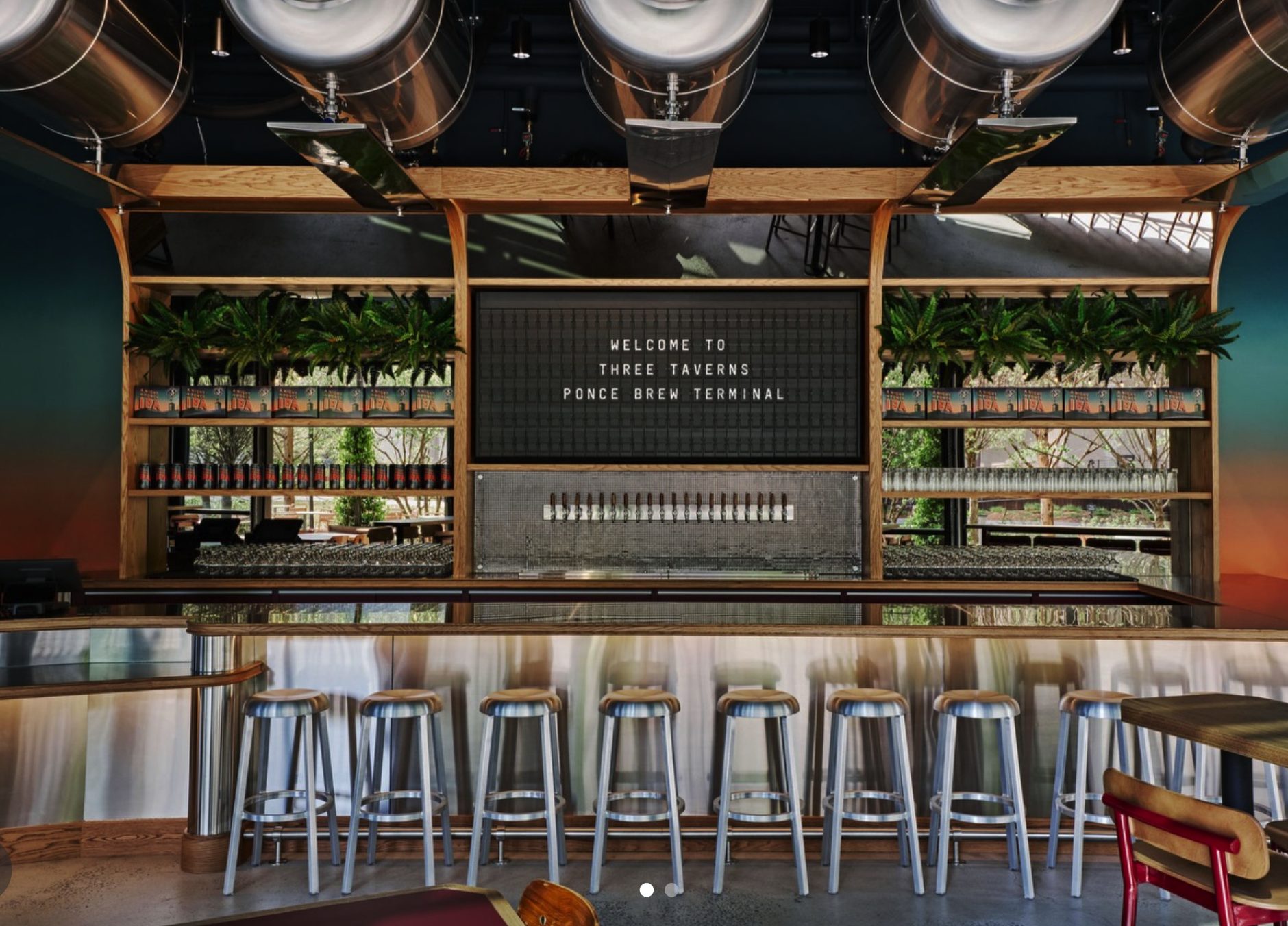
At Three Taverns Brewing, the signature Split Flap click turns changing content into a multisensory experience of motion and sound.
Mechanical Split Flap Aesthetic and Experience
Dimensional Movement
One of the most recognizable features of an Oat Foundry Split Flap is the rotation of the flaps as they cascade into place. The transitions (we offer over 30 transition styles for our displays) create a mesmerizing 3D pattern as the board shifts from message to message, highlighting the material texture and depth of every display. Research on tangible interfaces actually suggests that physical systems can invite more exploratory behavior than screen-only equivalents, one reason a kinetic, material display can function as part of an environment rather than merely a content surface.
Signature Sound
The beloved Split Flap click is reminiscent of the golden age of travel and tactile transit soundscape. The authentic acoustic output (45–75 dB depending on how many modules rotate simultaneously) is a part of the experience. In fact, research in architectural and environmental perception says sound “influences how people experience atmosphere, pleasure, alertness, and place.”

Nespresso’s display, built at architectural scale, adds material presence without introducing another glowing screen into the space.

Custom finishes, typography, scale, and movement make a mechanical Split Flap part of the space’s visual identity, not just a display within it.
Design Value
Our Split Flap and Picture Flaps are built at architectural scale, providing materiality, visible motion, and distance legibility. With various installation styles, every rotation is an “event” as the display changes, infusing spaces with personality and the incredibly popular analog aesthetic. Nostalgic cues also have commercial value when they fit the brand: experimental advertising research has linked historical or nostalgic creative cues with more favorable attitudes toward the ad and brand, as well as higher purchase likelihood.
Branding
We fabricate our custom installations for a specific site and transform them as part of a brand’s unique visual expression, rather than as a content template running on a standard monitor. A 2024 mixed-method study using survey responses from 512 consumers, plus interviews and focus groups, also found that visual, auditory, olfactory, tactile, and taste cues significantly contribute to sensory brand experience, which in turn is associated with customer satisfaction and brand attachment.
The relevant implication is not that every display must activate all five senses. It is that a brand has more ways to become meaningful when it can shape a coherent environment rather than only a graphic message.
Practicality
We find that an Oat Foundry Split Flap or Picture Flap may be the practical choice when the brief prioritizes durable placemaking, material presence, brand messaging, visible kinetic motion, long-term serviceability, or a non-screen-forward experience. Novelty is also a legitimate attention strategy: field research using mobile eye tracking has examined how unfamiliar product designs shape gaze behavior and perceived attractiveness.
Digital Split Flap Aesthetic and Experience

Replicated Sound
There is rarely a sound in this world that can’t be recorded and digitized. Consider the simulated nature sounds at a zoo or white noise machines. While these sounds can mimic the real thing, they don’t replace the tactile experience of listening to natural bird song or watching a wave crashing on the shore.
And while a screen can convincingly represent movement, and recorded audio can heighten that representation, research on virtual environments shows that sensory fidelity matters. In one controlled study, adding an appropriate ambient soundscape to a visual simulation produced large gains in perceived presence and realism.
The effect was not simply “more sound is better.” Ambient sound that fit the simulated environment mattered, while less convincing movement-triggered sounds did not reliably increase presence.
Simulated Movement
Screens can simulate anything, but they cannot replicate sensory experience. A screen can show a typewriter typing, for instance, but doesn’t fully encapsulate the feeling, sound, or movement of keys as you type. In short: real objects are processed differently from images.
The clearest directly relevant academic evidence comes from a Psychological Science experiment comparing real objects with closely matched 2-D and stereoscopic 3-D images. Real objects generated stronger attentional competition than either image type, even when the images simulated the same size, lighting, and many depth cues.
Design Value
In some spaces, digital is preferred. However, the flat simulation, glare, contrast, and visual noise of screens can be a disadvantage in design environments that foster a calm, intentional, or screen-free experience. In terms of design, the choice is also not simply mechanical versus digital. It is a decision between a display designed to become part of the spatial experience and one designed to maximize rapid, high-volume, easily refreshed communication.
Branding
A standard digital display usually begins as a commodity hardware component, while a custom mechanical installation can embody branding in its physical construction, finish, form, scale, typography, and behavior, as well as in its content. In fact, memory becomes easier to access when a brand is associated with multiple, consistent cues rather than just one visual treatment.
A fully branded Split Flap can combine a distinctive form, surface finish, color system, typeface, kinetic behavior, sound, and architectural context. A viewer may later remember “the big brass departure board with that specific click-clack” even if they cannot immediately recall the exact copy that appeared on it.
Recall becomes harder when branding is limited to a screen, as research identifies three measurable qualities of a strong sensory brand experience: the volume of sensory stimuli, their uniqueness, and their consistency with the consumer and context.
Experience
Screens remain useful tools for many communication needs, but their ubiquity can make them feel expected rather than distinctive in premium, hospitality, workplace, retail, and cultural environments.
A standard commercial screen has a generic substrate: the same black bezel, lit rectangle, and underlying display behavior could belong to almost any business. The on-screen campaign can be branded, but the object is not intrinsically associated with the brand once the content changes or the screen goes dark.
Practicality
Practicality is project-specific. A screen simulation may be the practical choice for video, full color, rapidly changing layouts, compact deployment, or lower upfront cost.

Why Mechanical Split Flaps Win in Aesthetics
Not that every screen is aesthetically bad, and not every mechanical system is automatically superior. A screen-based split-flap animation and an electromechanical split flap merely create different spatial experiences.
“In music production, there are software plug-ins that emulate vintage studio equipment,” says Jon Salmon, Support Technician at Oat Foundry. “They do such a great job recreating the sound of the original analog gear, but what ends up missing is all the slight imperfections you get from actual physical moving parts and electronics. I feel like that’s pretty similar here- you can have a perfect-looking digital split flap, but it completely lacks the analog part that resonates with people.”
“Shooting actual displays are always prettier in post than shooting something like a screen,” adds Jahmeir Reed, our Multimedia Specialist. “Screens emit so much blue light, or add glare from other lights around it. I would go a step further and say LED TVs in most third spaces look off: they never truly fit the space. Where something like Split Flap is eye catching but also low profile, giving it a timeless feel in every space.”

Let’s Put Your Wall in Motion
Split Flap transforms ordinary spaces into unforgettable experiences.
Book a demo today to learn how to build a display as unique as your brand.