

From a Technical Term to a Cultural Movement: What is Analog Now?
If you’ve put down your phone, picked up a vinyl record, or noticed how many of the cafes you actually want to sit in have no screens in them at all, you’ve already felt the shift. Something is changing in how people relate to digital life, and the word that keeps coming up is “analog.”
In this article, Colin Lew, Project Engineer at Oat Foundry, and Melissa Houghton, Digital Marketing & SEO Specialist at Oat Foundry, look at how analog moved from a technical category to a full cultural shift, and what that means for the brand spaces being designed right now.

What Analog Used to Mean
To understand what is analog in 2026, it helps to start with what the word used to mean. For most of the 20th century, “analog” was an engineering word. It described signals carried by continuous physical quantities like voltage, current, or mechanical position, the opposite of digital that work in discrete on-and-off states. Analog was a category on a spec sheet, and very few people outside of engineering departments used the word for anything else.
That definition still applies to mechanical systems like Oat Foundry’s Split Flap. But the word has taken on a much bigger life since then.
What is Analog Today?
By the 2020s, the answer to what is analog had shifted. The word started showing up in design magazines, in lifestyle podcasts, in urban planning conversations, on brand strategy decks. It had stopped describing technology and started describing a way of living.
Researchers are documenting this directly. A 2023 paper on what its authors call “analog entrepreneurship” frames the trend as a real economic phenomenon, with businesses built specifically around reviving analog technologies that digital tools had pushed aside. Another study describes “analogization” as something people actively practice and design for, not just a state that happens to exist.
So when people ask what is analog in 2026, the honest answer is: it depends on who’s asking. For an engineer, analog is still a technical descriptor. For a designer, a brand team, or a person who just bought their first film camera, analog is a design language, a tactile aesthetic, and an analog lifestyle category all at once.

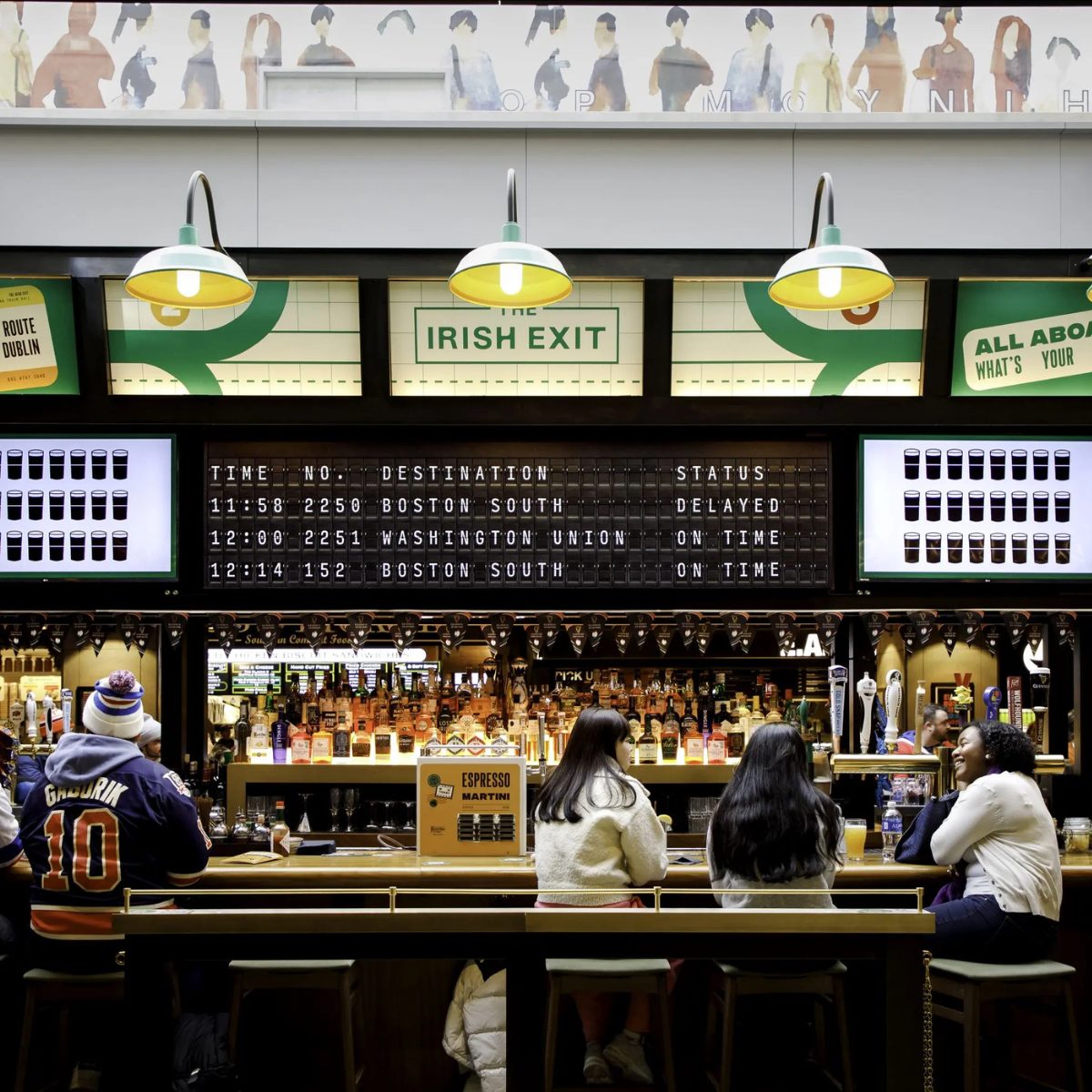
At Oat Foundry, we’re seeing a rise in offices, lobbies, and public spaces choosing analog displays over screens and video walls.
Why People Are Going Analog Again
A few things are happening at the same time, and together they explain why analog stopped being a niche interest. Now, it’s shaping how people choose the spaces they want to spend time in.
The first is plain exhaustion. Screen fatigue and AI fatigue are colliding. People spend more hours in front of displays than they ever have, and the rise of AI-generated content has made a lot of digital experiences feel oddly hollow. Recent research on digital fatigue documents rising burn out among young people, falling wellbeing, and the growth of digital detox movements as people step back from always-online lifestyles. A separate study on the cognitive cost of AI found that long-term AI use is associated with mental exhaustion, attention strain, and information overload. People aren’t imagining the feeling. It’s measurable.
Work has blurred the edges, too. Notifications, feeds, and “always-on” workplaces have collapsed the line between on and off, and people are looking for environments that feel offline, even just visually.
There is also a quieter pull back toward physical things. Vinyl, film cameras, paper books, handwritten letters, mechanical watches: the pattern keeps showing up, and nostalgia only explains part of it. What people are really after is tactile, physical things they can touch, hear, and remember.
This isn’t an anti-digital movement. Almost nobody is giving up their phone. People are looking for hybrid lives, with environments that include some part of the day that doesn’t live behind glass.

The Analog Aesthetic in Brand Spaces
For interior designers, architects, and brand teams, the implication is concrete. A space that includes a deliberate analog element, whether a physical display, a tactile material, or a moment of mechanical motion, reads differently to the people inside it. It gives a room a focal point with real materiality, something that feels considered rather than decorative, and it tends to age into a space rather than out of it.
Oat Foundry’s Split Flap installed in a historic lobby or a flagship café is doing two things at once. It’s a functional signage tool, and it’s a narrative element that says the brand has thought about what its space communicates beyond the words on the wall.
Learn more about the impact of analog in brand spaces with our related content:

There’s a practical layer here too. A mechanical display can change seasonally, rotate with campaigns, or update around events without the maintenance cycle, content churn, or visual fatigue of a screen. The motion of the flaps does the work that animation does on a digital display, but the underlying object stays the same. A space gets to evolve narratively without being replaced.
This is why analog has become a serious design conversation in commercial brand spaces, not just a passing aesthetic. The Storytelling in Design and Nostalgia Design blog posts go into how analog elements actually function in spaces designed for brands.
The Age of Analog
2026 is starting to look like the year of analog. Not the year analog comes back as a niche aesthetic, but the year it becomes a default consideration for permanent brand spaces. People are tired of screens. They are looking for something that feels real. And they are spending their time, more and more, in places that feel like a break from the digital world.
For brands building a space that needs to feel grounded, human, and built to last, analog isn’t a question of whether anymore. It’s a question of where, what kind, and how much.
Need more info and specs? See our related content:

Let’s Put Your Wall in Motion
Split Flap transforms ordinary spaces into unforgettable experiences.
Book a demo today to learn how to build a display as unique as your brand.