

For Oat Foundry, investing in screenless technology isn’t about resisting innovation. From the components inside each module to the software that controls the finished display, our Split Flap has evolved through years of engineering, testing, customer feedback, and hands-on manufacturing. That continued evolution is why our investment in analog goes well beyond nostalgia.
Mechanical vs. Digital Split Flaps: Why We Invest in Analog
At the beginning of a project, we sometimes encounter comparisons between mechanical and digital Split Flap simulations. For us, the continued investment in analog is the perfect balance of nostalgia and innovation. One of the biggest differences between the two at Oat Foundry is the craft and detail we put into every single display.
“Before starting a product design cycle, we are meticulous in the ways we ask questions from the Voice of Customer,” says Luc Tenthorey, Hardware Lead & Co-Founder of Oat Foundry.

For Google, Oat Foundry’s mechanical Split Flap transforms digital messaging into a tactile analog experience, bringing movement, sound, and physical character into the workplace.

Mechanical Split Flap combines movement, sound, and physical craftsmanship to turn everyday messaging into a memorable analog experience.
“Often that is from the end-user PoV; however, these Voices are also those of the production team building these parts day in and day out; from Creative, who is focusing on how to make the product experience as intuitive as possible; from the Sales team, who want to know how deal friction can be eliminated; from a Procurement standpoint, how we are going to leverage the strengths of our existing supply chain network to ensure the best quality components. It’s a holistic approach, wherein product design begins in small bites and forms the foundation on which the product is created.”
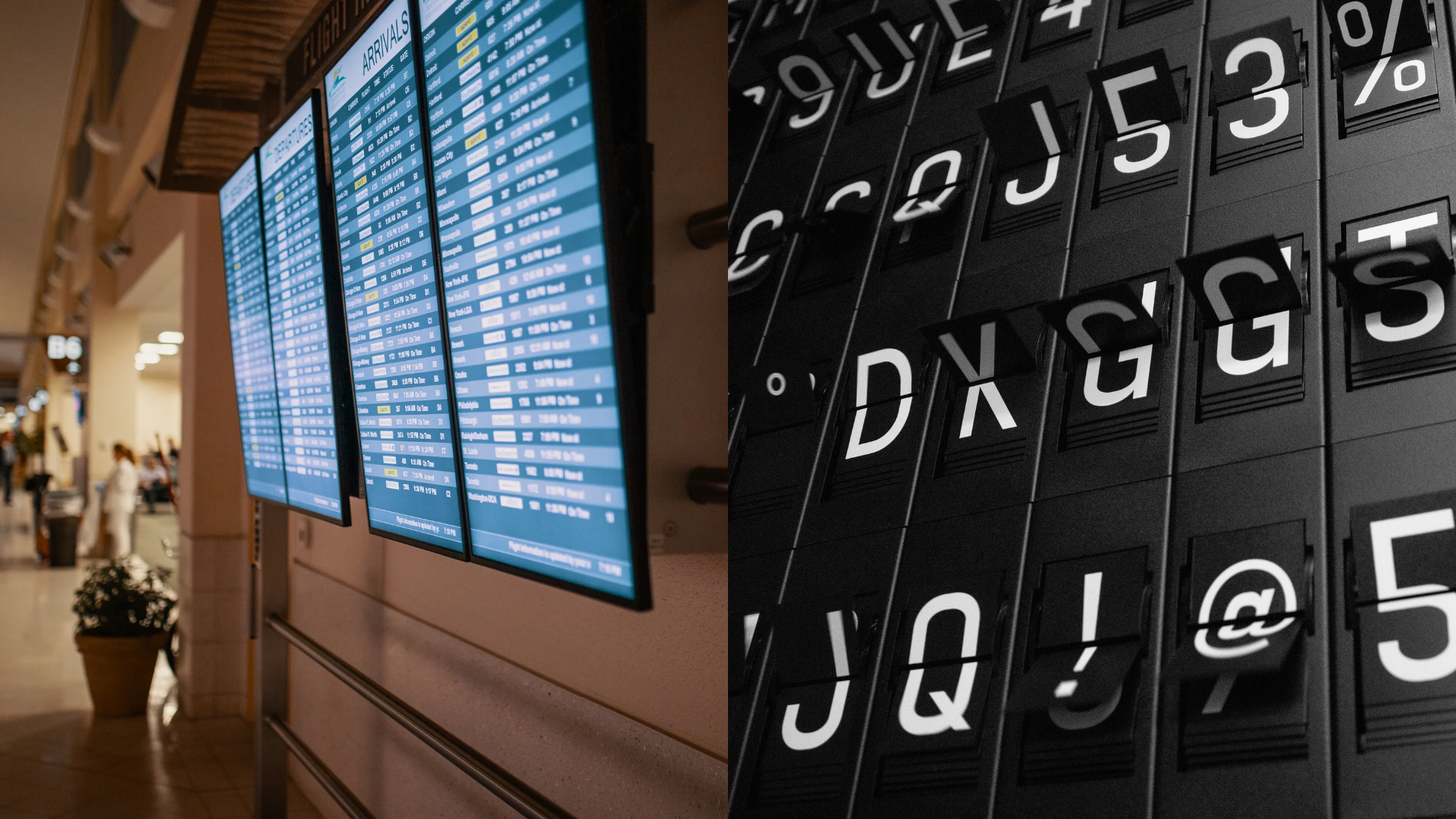
Mechanical vs. Digital Split-Flap: Which is Right for Your Space?
Simply put: we invest a lot of time into every display we build. From there, here’s how our process and products stack up against digital simulations, based on common misconceptions and questions about mechanical Split Flap displays.
Mechanical Split Flap vs. Digital Split Flap
Aesthetic and Experience
Our displays are architecturally integrated into every space. As a result, we’ve partnered with brands such as American Airlines, Google, Starbucks, and Nespresso on bespoke Split Flap displays. When comparing our Split Flaps to digital split flaps, here’s how they stack up in terms of aesthetics.
Mechanical Split Flap Aesthetic and Experience
- Dimensional Movement – Our 30+ mechanical transitions create a fluttering effect using real flaps.
- Signature Sound – The beloved Split Flap click is reminiscent of the golden age of travel and tactile transit soundscape.
- Design Value – Our Split Flap and Picture Flaps are built at architectural scale, providing materiality, visible motion, and legibility from a distance.
- Branding – We fabricate our custom installations for a specific site and transform them as part of a brand’s unique visual expression.
- Practicality – We find that an Oat Foundry Split Flap or Picture Flap may be the best choice when the brief prioritizes brand messaging, long-term serviceability, or a non-screen-forward experience.

At Crust & Crumb, Oat Foundry’s mechanical Split Flap brings analog character into the space, transforming everyday messaging into a tactile, memorable brand experience.

For the Toronto Blue Jays, Oat Foundry’s mechanical Picture Flap Statement Wall brings the energy of the ballpark to life through motion, sound, and an analog experience designed to capture fans’ attention.
Digital Split Flap Aesthetic and Experience
- Replicated Sound – While these sounds can mimic the real thing, they don’t replace the tactile experience of listening to our displays.
- Simulated Movement – Screens can simulate anything, but they cannot replicate sensory experience.
- Design Value – The flat simulation, glare, contrast, and visual noise of screens can be a disadvantage in serene design environments.
- Branding – Simulations rely on standard digital displays.
- Experience – The ubiquity of screens can make them feel expected rather than distinctive.
- Practicality – A screen simulation may be the practical choice for video or lower upfront cost.

Craft is a part of everything we do. See above: an artist commissioned a pen-and-ink illustration of an Oat Foundry Split Flap display.
Mechanical Split Flap vs. Digital Split Flap
Common Misconceptions
From comparisons to digital signage to consumer signage and more, we’ve encountered a few mechanical Split Flap misconceptions. In our experience, here are the most common misunderstandings about how our displays and digital simulations both function.
Mechanical Split Flap Misconceptions
- Ongoing Maintenance: After installation, routine maintenance typically includes periodic dusting every 6-12 months. Because our systems are modular, teams can service or replace individual flaps or modules.
- Tech Support: We offer real-time error correction with a support team of real people (not AI or chatbots).
- Making Updates: The backend of Oat Foundry Split Flap and Picture Flap displays is digitally controlled. Like simulated digital Split Flaps, users update messages through Oat Foundry’s browser-based Portal CMS.
- Updates Across Locations: Users can send real-time updates digitally to one or more displays across several locations.
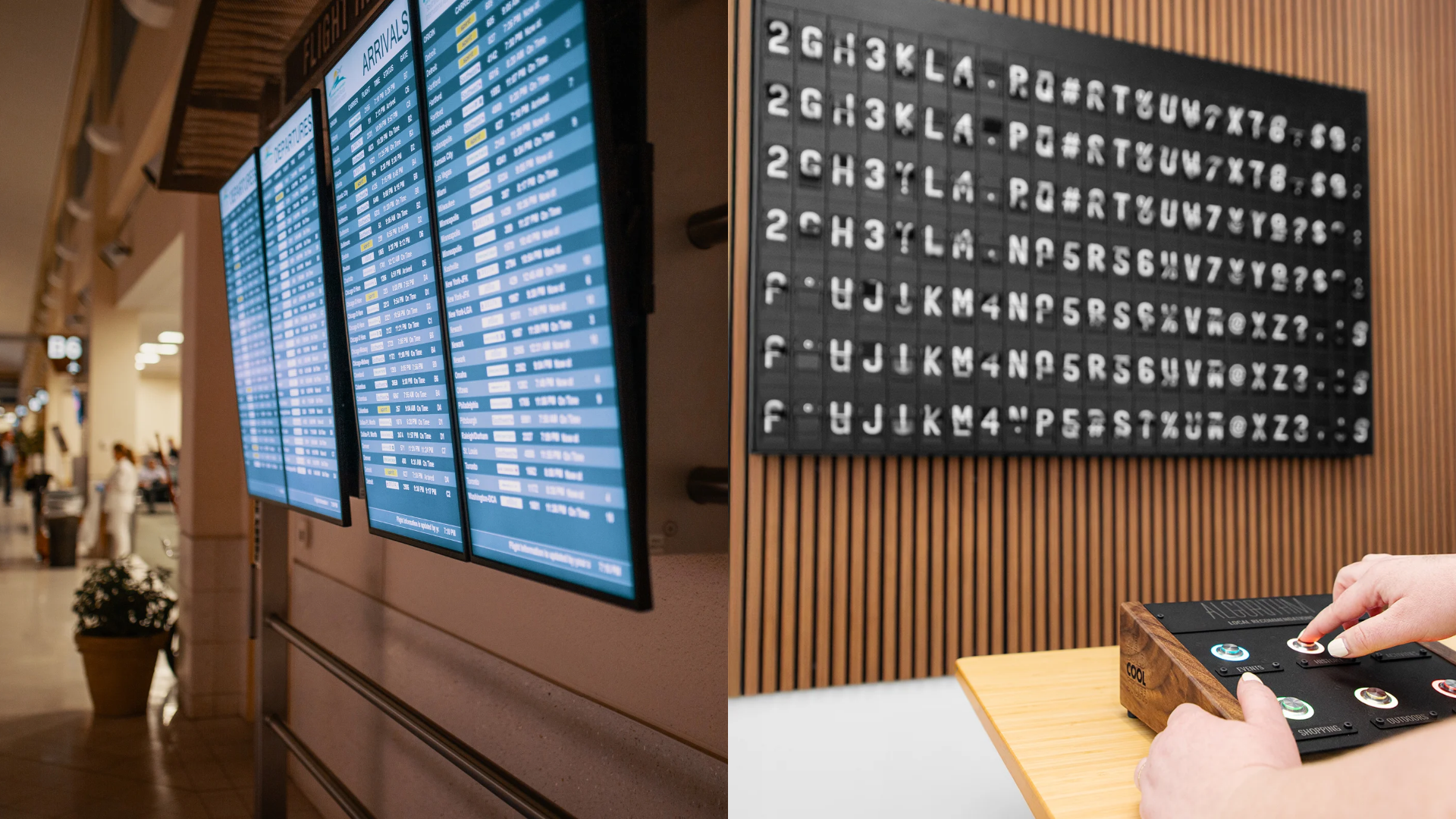
Digital Split Flap Misconceptions
- Always On: A digital simulation may always be “on”, but the functionality depends on a chain of electronic and software components. A break in any part of that chain can lead to failed updates, blank screens, or offline status.
- Always Should Be On: Just because digital screens can always be on doesn’t mean they should be, as they consume energy while operating.
- Physical Failures: Monitors, screens, and video walls are prone to cracks, broken pixels, and overheating.
- Ongoing Maintenance: Anyone with a computer or monitor knows it routinely needs maintenance. Our phones even require updates.
Mechanical Split Flap vs. Digital Split Flap
Pricing
Our displays are built by hand and priced by the module, so naturally, a customized Oat Foundry display costs more than off-the-shelf monitors and screens. After initial installation, here’s how ongoing and recurring costs break down.

At Dreamforce, Salesforce’s Split Flap turned event messaging into an interactive focal point designed to stand out in a busy conference environment.

For the Culinary Cup game board, mechanical Split Flap offered an alternative to adding yet another screen, making the experience physical and unexpected.
Mechanical Split Flap Pricing
- Free CMS Use: After the initial purchase and installation of an Oat Foundry Split Flap or Picture Flap, there are no recurring Oat Foundry software, licensing, or subscription fees for standard use.
- Warranty: Oat Foundry offers a five-year limited warranty with each display purchase.
- Content Creation: Brands still need to create, approve, schedule, and maintain brand messaging. Our Portal includes a content library with premade templates.
- Lifespan: Our displays are built to last for decades. Our shop Split Flap recently completed 50 million rotations (250 years of simulated use).
Digital Split Flap Ongoing Costs
- Recurring Costs: The total ongoing cost of a screen-based system varies by configuration. It may include CMS subscriptions, media-player hardware, replacement screens or players, and service labor.
- Warranty: Warranty terms are product-specific. For illustration, LG lists three-year parts-and-labor warranties for monitors and signage. Samsung commercial-display warranties also commonly list two- or three-year coverage.
- Content Creation: Like any other communication display, brands need to invest time in creating and scheduling brand messaging.
- Lifespan: Digital displays have finite component life and ultimately require repair, refurbishment, recycling, or replacement.

At The Irish Exit, Split Flap gives the bar a constantly changing focal point, bringing personality to the space without relying on another glowing screen.

At Momofuku, Split Flap turns the menu into part of the restaurant’s design, giving changing information a physical presence.
Mechanical Split Flap vs. Digital Split Flap
Sustainability and Power
One of the biggest differences between a mechanical Split Flap display and a digital simulation on a screen is power usage. Our displays use kinetic energy to rotate the flaps and are known for their sustainable design, helping brands like Momofuku, Capital One, and the University of Arizona create screen-free spaces.
Mechanical Split Flap Sustainability and Power
- Power and Energy Consumption: At rest, an Oat Foundry display uses as little as 29–197 W of power, depending on display size.
- Heat Output: Split Flap heat output is 180–1,034 BTU, depending on product size. Our systems are low-thermal and do not require active cooling.

At Philadelphia’s Fitler Club, Split Flap adds a distinctive analog detail to the member experience, complementing the club’s design-forward approach to hospitality.

At the University of Arizona, Split Flap gives campus messaging a physical presence, turning everyday updates into something students actually stop to notice.
Digital Split Flap Sustainability and Power
- Power and Energy Consumption: A typical commercial 67-inch direct-view LED display consumes 252 W and up to 900 W at maximum load. Larger LED walls scale by area: a commercial LED cabinet may average 92–126 W per cabinet and reach 200–280 W per cabinet depending on brightness.
- Heat Output: Because the electrical energy consumed by a display ultimately becomes heat within the space, heat output rises in direct proportion to operating wattage. A 65-inch commercial LCD rated at 145 W typical / 200 W maximum produces approximately 495 BTU/hour typical / 682 BTU/hour maximum.

Mechanical vs. Digital Split-Flap: The Right Fit for Your Space
In our years of experience with analog technology, we find the decision between a mechanical display and a simulated digital Split-Flap comes down to a few simple factors.
An Oat Foundry Split-Flap:
- Fulfills the desire for more authentic, screen-free spaces.
- Is a sustainable, timeless display, similar in scale and expense to a custom architectural installation.
- Creates an orchestrated, tactile visual and auditory experience.
- Supports distinctive brand storytelling in hospitality, transit, workplace, retail, cultural, and public-space environments.
Digital simulations:
- Can be purchased at relatively low cost and played on a television, monitor, or LED display.
- Remain screen-based experiences, subject to the same attention fatigue and visual sameness as other digital signage.
- Generally function as a graphic effect rather than a spatial object or architectural feature.
Learn more about the differences between an Oat Foundry mechanical Split Flap and digital simulations by booking a demo call with our sales team.


Let’s Put Your Wall in Motion
Split Flap transforms ordinary spaces into unforgettable experiences.
Book a demo today to learn how to build a display as unique as your brand.